Monday, June 9, 2014

Now to the Carlsson side of the family

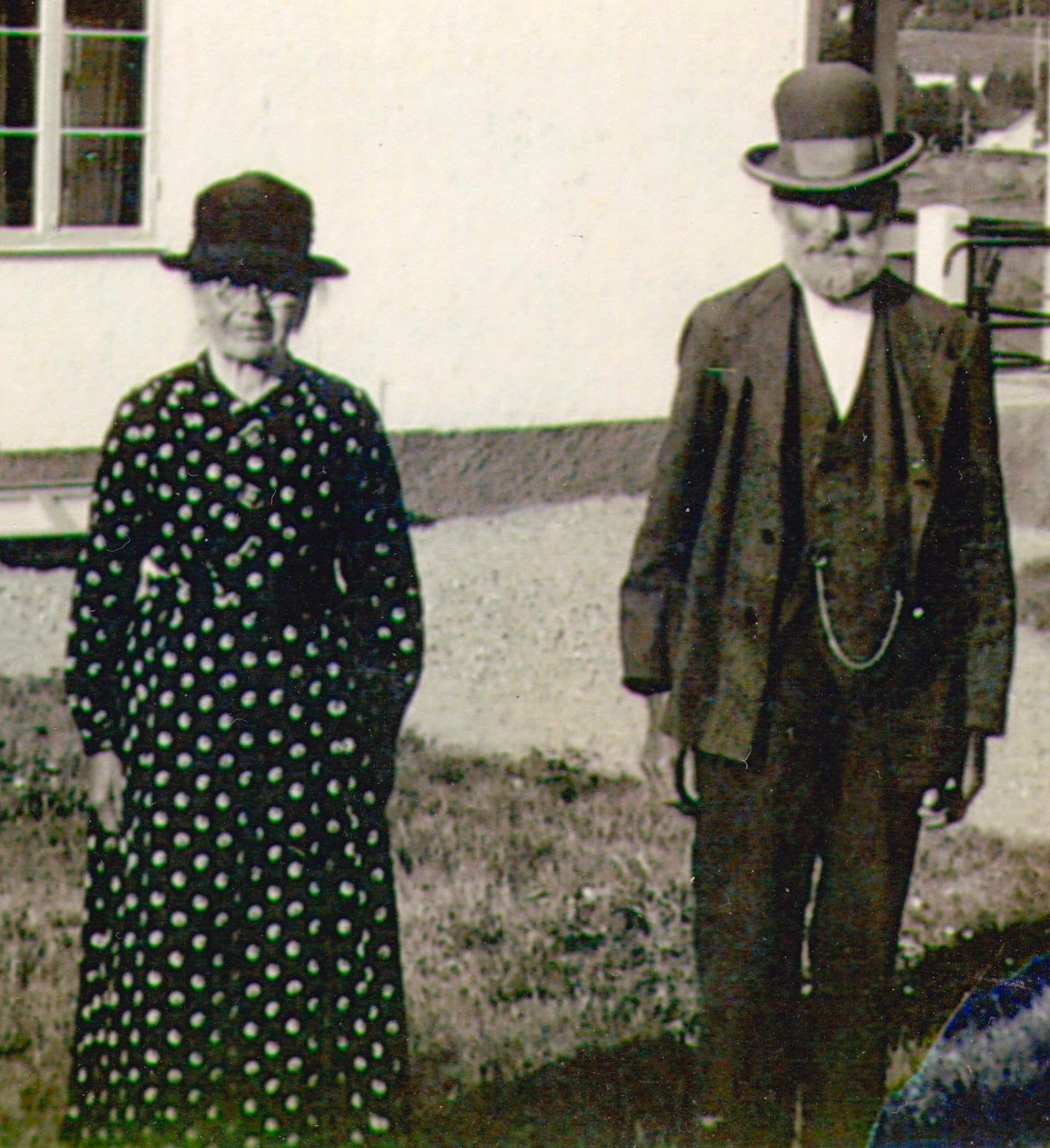
Carl Adolf Carlsson, before he grew
the beard that Mom remembers
"Now for a while let us talk about my mother’s family. First there was Morfar. His full name was Carl Adolf Carlsson and I think both were spelled with a C. He was kind of a gruff character. He rarely ever talked kindly to us kids. He didn’t like kids. They were in the way. He had a big rough grey beard – it was not trimmed at all -- and he used snuff in the nose and it ran down the beard and it looked so yucky to me. The only time that I remember Morfar speaking in any kind of a kindly way to me was when Margaretha and I were at Mormor’s one day. We were out on the lawn, and we were trying to stand on our heads. Morfar came by and he showed us how to do it. He said to grab onto the grass in front of us and then we could stand up on our heads.
On the other hand, us kids just loved Mormor. My Mormor’s full name was Anna
Anna Mathilda and Carl Adolf Karlsson
(I can't help but chuckle over how much space
there is between the two of them!)
Mathilda Nicklasdotter. She would take me on her lap and she would sing, “Du o ja, du o ja, du o ja.” “You and I, you and I,” she would sing. I loved Mormor’s bread. Everytime I had been to mormor’s house, I carried home a loaf of bread. I don’t know how much different it could have been from mother’s but it was just that it was Mormor’s, I think. Mormor never had any teeth that I can remember. They used to tell me that I used to say, “When I grow up I’m going to be rich and I’m going to take Mormor for a ride in a car and I’m going to buy her some teeth.”
Morfar and Mormor, they had one son first. His name was Axel. I never knew Axel. He died when he was 20. I believe he had pneumonia; I’m not sure. After Axel came Oscar. He was a jolly happy man, always fun to be with. He married a girl from next door named Frida. Frida had a boy; his name was Hugo. He grew up like our cousin. He was older than Brita. Oskar, in later years, had his own building firm in Kisa. He built a lot of the houses there. One of them was his own. He called it Fridsdal, after Frida and the word “frid” means peace. Fridsdal was three stories high. A veterinarian rented the first story. I don’t remember who lived on the second story, but on the third story, Oskar and his family lived by themselves.

Oskar and Frida Karlsson, taken in 1921 or 1922
Frida was such a kind person and sweet. Every time when we were sent to Kisa on some errand on our bicycles, we always had to go up and say hello to Moster Frida. I suppose that was before we had a telephone, because we always had to go up and say hello and she always had saft and cookies. She just could not be hard on the kids. They had two kids, Karin and Axel. Karin was, I believe, a year younger than Margaretha and Axel was the same age as Lennart. Axel was a real rascal when he was little. Sara remembers that when there was any kind of family party, Frida and my mother decided which one of them should bring their little boy. They couldn’t have Axel and Lennart at the same party, because they caused so much trouble. One time Karin and Axel got into some kind of a fight and Frida couldn’t do a thing about it. She ran down the hallway to where Morbror Oskar was in his office and she called, “Oskar! Oskar! The kids are fighting!” then here comes Oskar and he just had to show up in the door and the fight was over. We had a lot of fun with Axel and Karin. We have still seen them when we go home and Axel and his wife Gerd have been visiting us here. Axel turned out a good man."

Sunday, June 8, 2014

Ragnar the youngest

Ragnar Boberg, 1915,
13 years old
"The last to be born in my father's family was Ragnar. He was 12 years old when his mother died so he lived with Mom and Dad and Farfar. He was like a big brother to us when we grew up.  I don’t know for sure how old I was when Ragnar met a girl named Hulda Fagrell. She was from Ulrika and Ragnar and Hulda were married.  I remember going to that wedding. It was wintertime and there was a snowstorm. Dad was determined to go anyway, so he hired a taxicab from Kisa to come and take us to the wedding. There was so much snow and no snow plow had gone and the taxi got too close to the edge so it got stuck in snow and Dad and the taximan would get out and shovel and then we could go some more. By the time we got there, the wedding ceremony was over but we got in on the party anyway. Us kids were very fond of Ragnar and Hulda too for that matter.
When Hulda and Ragnar were first married, they farmed her homeplace that was called Kottebo in Ulrika. They farmed there for about six years or so and then the old folks died off and Hulda’s siblings wanted their share of the farm, so it was sold, and Ragnar couldn’t farm there anymore.
Ragnar often has a smile
in photographs which was
unusual in those days
because you had to hold
your pose for a long time :)
They rented a farm outside of Linköping, and I was sent from Kjettestorp to help Hulda pack and move, and Åke Ivar’s son was sent from Sjökumla to help Ragnar. They couldn’t move everything, so they had an auction and sold a lot of things. Well, when everything was packed and ready to move, Sunday came along, and Hulda and Ragnar were going to church. They belonged to the Pentecostal church in Ulrika, and I went along. We went on two sparks. Some of you know what a spark is – it’s a sort of a sled that you stand up on and you kick along. You can ride it in the snow and ice. It has two metal runners that are bent up in front and on those runners there is built up handlebars and a seat, so you can have one passenger on a
Ragnar's smile in 1921
spark.
Well, we got to the church and we took our coats and hats off in the cloakroom and went in and sat down. We had barely sat down when a man came and sat down beside me and asked me if I didn’t want to be saved, if I didn’t want to give my heart to Jesus. He went on and on. I had been brought up Lutheran and I was terribly shy so I couldn’t think of how to answer these questions coming from a grown man who I didn’t know. I can’t remember that I answered him anything, but finally I whispered to Hulda, “I’m leaving.” I got up and put my coat and hat on and took one spark and went home.
Standing in front is Margaretha. Sitting are
Johan August, Hildegard, Elin and Thor.
Ragnar, Henrik and Midi are standing in back.
This picture is particularly interesting they're
in their everyday work clothes. I'm guessing
it was taken in 1927 or 1928.
They soon came home too but then in the late afternoon, they were going back to church. There was a potluck dinner so the church could say goodbye to them. They wanted me to come but I refused. I said I would stay home and milk the cows, so they didn’t have to hurry home. They had two cows that they were going to take along. As I was going to the barn, I realized that Ragnar had sold all of his lanterns in the auctions, so I couldn’t find one lantern. I had to take a candlestick with a candle and put that in the little window in the barn, and then I sat down to milk. After I had milked one cow, Åke came and he wondered why I was there by myself. When he heard my story, he had to make some jokes about it. He said things like Pentcostals were just louder than Lutherans all the time and the loud Bobergs were Pentecostals and the quiet ones were the Lutherans. He was Pentecost himself but he was a jolly, happy fellow and he saw the funny in it. Then he milked the other cow, so when Hulda and Ragnar came home, everything was done.

A few days later, Åke was out in the woodpile chopping wood. There was a
Hulda Boberg and Monica,
April 1948
rule that you couldn’t leave a place without wood. There had to be enough wood cut, so the next person who came in there could get started. I was in the kitchen helping Hulda and there came this preacher again. He looked at me and then told Hulda, Oh he felt so bad about that girl that didn’t want to be saved and she would soon go to hell.  I went out to where Åke was working on the woodpile and said I wouldn’t go in until that preacher was gone and I didn’t either.
When Hulda and Ragnar had been in the new place about a year, the first little girl was born. Then after another year another little girl was born. They were named Monica and Katarina, I believe. When the first girl was born, then I was sent from Kjettestorp to help Hulda, so I stayed there a couple weeks, I think. When the second girl was born, I don’t remember. I must’ve been working somewhere else. When Ragnar retired from farming, they moved to Motala, and there they belonged to the same Pentecostal church as Ivar and his family. I think they really had a fine time together, those two brothers. Ragnar worked in a factory that made electrical
This is Mom doing Bobbin Lace
or Knyppling in Swedish
bulbs, and both Hulda and Ragnar and the girls – at least the oldest girl – learned how to do knyppling. That is that lacework that you do on a little loom, set in a pillow, where you wind the thread around pins and the thread is wound onto wooden bobbins.
 Ragnar had a heart problem just like his dad and he died somewhere in his 60s."

Saturday, June 7, 2014

Linnea and Hildegard

"Now let us talk about Linnea. Linnea was a happy, jolly lady, and when I was growing up, I loved it when Linnea came. In the summertime, she would come and kick her shoes off and run barefoot out there and play with us. We played skatten, and we played kurragömma (hide and seek), and something we called Vinker-leken. This was a game where you hid somewhere very hard to
This is Mom's handwriting describing who is in this harvest photo.  I love that she included
the name of the horse :)
find, but you had a stick with a white handkerchief, and you waved it in the air so people could see about where you were. Then you had to get away from there fast before they found you and go to another place.
Well, Linnea, she had worked somewhere, I don’t know where, but she met Gunnar Nilsson. Linnea and Gunnar, they farmed somewhere up close to Linköping but harvest was a lot of work so everyone used to help out at times. I don’t remember the name of their farm.
Linnea Boberg Nilsson
taken in 1915
Linnea had a very hard time to have children. The first girl she had died at birth. I believe they had one more girl who died at three months old. She was what they used to call a blue baby. She had a heart problem. Then they had a girl named Svea come along, a cute girl. I vaguely remember Svea. She was about the age of Sara or Henrik, so she was older than me and then after a few years they had Rune. Rune was her only child that lived to adulthood because Svea died under tragic circumstances.
Years ago before refrigerators, they used to saw up blocks of ice on the lakes in the winter, and they would store them in a pile of sawdust, and they would have that to keep their food cold in summer time. They would have a big wood tub in the storehouse where they would store food items and put one block of ice in at a time. Anyway, Farbror Gunnar, he had been down helping saw the ice; the neighbors helped each other. He had been helping one neighbor that day and Svea saw which way her dad went, so she went after, but they went down one
Rune Gunnarsson in 2009
He has since passed away
and is sorely missed.
way and up another from the lake and she didn’t see them going up. She went all the way down to the lake and she fell in that ice cold water and nobody missed her until it was too late, so Svea drowned when she was eight years old.
Rune is still alive and many of you have met Rune when we went to
Sweden. He and one of his boys, Magnus, and a granddaughter, Linnea, have been here to visit us too. We talk on the phone. He has always been like another brother to us.

Well, now let’s go to Hildegard. That was Dad’s youngest sister. She had rheumatic fever when she was
This is Hildegard Boberg's confirmation
photo from 1914 or 1915
nine years old and there was nothing they really knew to do in those days, so she was crippled. Her legs were not straight and she couldn’t get her arms up to comb her hair or anything. There was no after-treatment. She was up at the hospital in Stockholm, Karolinska, the biggest hospital in Stockholm, and they had a floor for rheumatic patients. She was up there and got some training afterwards, but she could never completely take care of herself and she never got married. She was always kind to us kids though."

Thursday, June 5, 2014

Folke Boberg, Missionary to Mongolia

Photo taken in Kisa in 1915
"And then there was Folke. Folke was the third in line, so then there was both Ivar and Dad to work on the farm. I guess he worked at home for a few years but then he went off to school. He went to something that they have in Sweden called Folkhögskolla. They started to realize that people needed more education than just sixth grade, so they started up these schools for adults, and he became a missionary to Mongolia. He studied to be a missionary in -- I think it was – Jönköping, and then he studied some in America. He was a missionary for the Pentecostal church. 
He had a girlfriend that the whole family loved. I don’t remember her, of course because he went out before I have any memory of it but she died out there of one of these diseases that they had in those days in the foreign lands. Then he found another woman and got married, named Greta and Greta was not the most well-liked
This photo came from one of
Mom's photo albums and she
labeled it Faster Greta and
Farbror Folke in Mongolia
person around. They didn’t have any children of their own. They adopted a boy from Gothenburg. His name was Kjell-Egon. They went out together as a family to Mongolia. 
Folke had at least three times out. I remember one time he came home on furlough, and he was not married then. He brought home a bunch of Mongolian native hats; he let us kids try them on. We thought they were very funny.
Folke wrote two books about his time in Mongolia. The first one was called Med Fridbudskapet Till Mongoliet (With a Peace-message to Mongolia) and the second one was called Bland Pilgrimer I Djungis Khans Land (Among Pilgrims in the land of Gengis Khan). He wrote some lessons in how to speak in Mongolian too. He also wrote the first Mongolian/English dictionary and had an audience with the King of Sweden when he came home after he had retired. That
The kids trying on Farbror Folke's hats
I'm not sure who the first two on the left are -- Could the
first be Margaretha? Maybe the next little boy is Folke i Sör?
Then I think we have Brita, Henrik Sara and Mama
was king Gustav XVI Adolf; he was very interested in the Orient and in those kind of things."


I just found this picture on Kindabild.se. The website has digitized the photos taken by a professional photographer in Kisa. It says the photo was taken in 1921. I'm guessing it was taken in honor of Farbror Folke's impending departure for America -- that's him in the center with the flowers. He was going to Chicago to study. Mom's Farfar Johan August sits to the far left and Hildegard sits to the far right. Standing are Ivar and Adela with their children, Torsten sitting on the plinth and Ingegärd standing by Farfar. The last two standing in the back would be Midi and Ragnar.

Notes:

The Mongolian/English Dictionary in three volumes by Folke Boberg has become very rare. Last time I looked there were three for sale in the world and the average price was $1,000.

Wednesday, June 4, 2014

Midi, Thor and Ivar

Ivar, Midi, and Thor Boberg, taken somewhere around 1900 
"Then there was Midi. Midi was the oldest one. She was a quiet, unassuming person, very kind, but she had had some kind of childhood disease, measles or something like that when she was little, and she lost her hearing. 
She did have some hearing but you had to talk loudly when you talked to
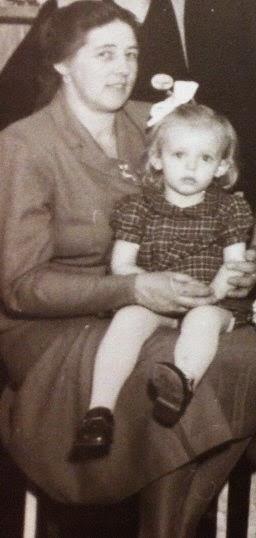
Midi, Hildegard and Mama, mid-1940s
her. At one time, she had a boy friend who wanted to marry her, but Farfar said no. She had to stay home to help the family. There were all those other little kids, and he couldn’t handle it all with Farmor sick and then Farmor died, so Midi stayed there. She offered her life for her siblings. She worked hard her entire life as I was growing up at Kjettestorp.

Then there was dad. We always called him Papa. Papa was a strong, kind
Thor Boberg in 1912, at 20 years old.
In Sweden, all men are required
to do some military service.
man. I can’t remember ever him spanking any of us, and I’m sure we deserved it sometimes, but he had order. He just needed to raise his voice a little bit and look at us, and we calmed down, and I should know because I was probably the liveliest one of them all. Papa was a smart man too. He had six years of schooling in Kjettestorp school before he took over the farm.  He wanted to take a job at the postal service but Farfar said no. He was the oldest boy and he had to stay home and help with the family. Dad had sometimes also thought he wanted to go into the cavalry but that was no too, of course. Dad liked animals. Well when Papa and mama were married in 1917, dad said when he had been married for seven years, he had less than when he got started. That was those hard years when there was not much money around and his equipment started to need replacement and he had a family to feed.

Well, then I should tell about Ivar. Ivar was a jolly, happy man. He married a girl name Adela. She came from a farm named Ö. It’s the shortest name of any place I’ve ever known. Ö means an island, but Ö that’s an O with two dots
Ivar and Adela Boberg
over. She had a brother named Enar and he had a wife named Ella and they were not too far from Kjettestorp so they used to come and visit. They had two girls around the age of Brita. The oldest I think was Brita’s age and the other a couple years younger and then when the girls were 17 and 18, around there, they had two little boys, one was SvenErik and I don’t remember the name of the other one. Anyway Ivar and Adela had three kids. I don’t remember where they lived when they were first married.  But later they bought a farm named Sjökumla close to Motala. They had three children: Ingegärd, Torsten and Åke.  That whole family was Pentecost; they belonged to the Pentecost church in Motala when they moved to Sjökumla. Åke was a missionary to Congo at one time."